Power Equipment 4400 Watts Inverter Generator Gas Powered
Westinghouse 12500 Watt Dual Fuel Home Backup Portable Generator, Remote Electric Start, Transfer Switch Ready, Gas and Propane Powered
Westinghouse 14500 Peak Watt Tri-Fuel Home Backup Portable Generator
Best Generator Black Friday Deals 2026
A generator purchase is easier to get right when you start with the loads you need to run, the fuel you can use, and the way you plan to connect it. This guide compares three portable options: a gasoline inverter model, a dual-fuel home-backup generator, and a tri-fuel generator. Their power outputs, outlets, fuel choices, and starting arrangements differ, so the right fit depends on your priorities rather than a single headline specification. During Black Friday, compare the exact model and variant shown in the offer with the product details here; do not assume a promotion or configuration applies to every listing. Check the final price and included equipment before deciding.
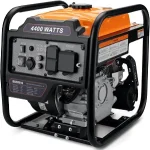
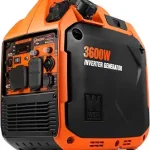
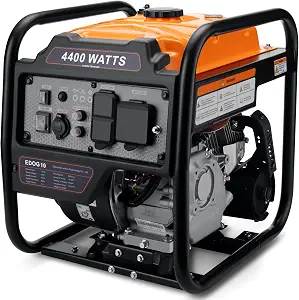
Power Equipment 4400 Watts Inverter Generator Gas Powered
Check Price on Amazon
This gasoline-powered inverter generator is a compact-output option for shoppers who want a generator with a specified weight of 56 pounds. Its output is 4400 peak watts and 3400 running watts. Use the running-watt figure when considering the equipment you expect to operate at the same time, and leave room for any starting demands your equipment may have. The peak figure is not a substitute for checking the requirements of the actual devices you plan to connect.
The listed connections are two 120V AC ports, a 12V DC port, and an RV port. That selection may suit a shopper looking to connect household-style loads or an RV connection, provided the devices and their plugs match the generator’s outlets and their electrical requirements. It runs on gasoline and has a 2 gallon fuel tank. The listing states a noise level under 72 dBA from 23FT away; keep that stated distance in mind when using the figure to judge whether the sound specification fits your setting.
For Black Friday shoppers, this is the Best Budget choice among the products in this guide, based on its comparatively modest stated running output and 56-pound weight—not on a measured value judgment or an advertised deal. Those figures make it worth considering when you do not need the larger outputs offered by the backup models and want a lighter option to evaluate. The tradeoff is that its listed fuel choice is gasoline, and its running output is lower than the other featured generators. Before choosing it, compare your load list with 3400 running watts, confirm the RV connection suits your setup, and check the offer’s exact model details.
Key specs
| Power output | 4400 peak watts and 3400 running watts |
| Fuel | Gasoline |
| Outlets | 2*120V AC ports, 1*12V DC port, 1*RV port |
| Fuel tank | 2 gallon fuel tank |
| Noise level | Under 72 dBA from 23FT away |
| Weight | 56 pounds |
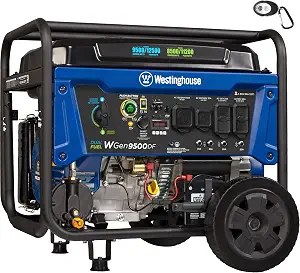
Westinghouse 12500 Watt Dual Fuel Home Backup Portable Generator, Remote Electric Start, Transfer Switch Ready, Gas and Propane Powered
Check Price on Amazon
The Westinghouse dual-fuel generator is the Best Overall selection in this guide for shoppers who want substantial stated output along with a choice between gasoline and propane. On gasoline, it provides 9500 running watts and 12500 peak watts; on propane, it provides 8500 running watts and 11200 peak watts. Those fuel-specific figures matter: compare the appropriate running output with the loads you intend to power rather than assuming the two fuels deliver identical output.
Starting options include remote start with an included key fob, electric start, and recoil start. The product listing gives runtime of up to 12 hours and a 6.6 gallons fuel tank. Runtime is stated as up to that amount, so actual operating time for your circumstances is not guaranteed by that figure. Its outlets include two GFCI 120V 5–20R 20A standard household receptacles, a transfer switch ready 120V L14-30R 30A outlet, and an RV ready 120/240V 14–50R 50A outlet. Confirm that the outlet and connection method match your equipment and planned installation.
The listed engine is a heavy-duty 457cc Westinghouse 4-stroke OHV engine with a cast iron sleeve, automatic low oil shutdown, and digital hour meter. These details may be useful to shoppers comparing engine and operating features, but they do not remove the need to follow the product instructions. During Black Friday, consider this option if the higher stated output, two fuel choices, and remote-start feature suit your backup plan. Its listed fuel tank capacity and multiple outlet types are practical details to weigh, while the gasoline and propane output differences call for careful load planning. Verify the exact model and included components in the offer before purchase.
Key specs
| Power output | 9500 Running Watts and 12500 Peak Watts (Gasoline); 8500 Running Watts, 11200 Peak Watts (Propane) |
| Starting | Remote Start with Included Key Fob, Electric and Recoil Start |
| Runtime | Up to 12 Hours of Run Time |
| Fuel tank | Tank Volume 6.6 gallons |
| Outlets | Two GFCI 120V 5–20R 20A Standard Household Receptacle, One Transfer Switch Ready 120V L14-30R 30A, and One RV Ready 120/240V 14–50R 50A |
| Engine | Heavy Duty 457cc Westinghouse 4-Stroke OHV Engine Featuring a Long-Lasting Cast Iron Sleeve with Automatic Low Oil Shutdown and Digital Hour Meter |
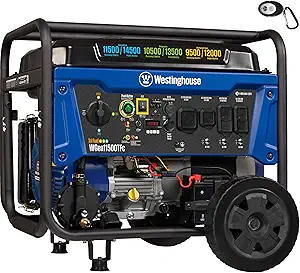
Westinghouse 14500 Peak Watt Tri-Fuel Home Backup Portable Generator
Check Price on Amazon
This Westinghouse tri-fuel generator is the Best for Fuel Flexibility pick because its listed fuel options are gasoline, liquefied petroleum gas, and natural gas. More fuel choices may matter when you are planning a backup setup around the supplies available to you, but the right choice still depends on your own circumstances and connections. The stated output is 11,500 running watts and 14,500 peak watts on gasoline. The provided output figure applies specifically to gasoline, so do not assume those same figures apply when using another listed fuel.
For home-backup planning, the listing describes 50A and 30A outlets as pairing with an interlock kit, manual transfer switch, or Westinghouse WATS200 ATS system. Those connection items are sold separately. Check the requirements of your home setup and have the appropriate installation arrangements in place; the mention of these options does not mean the additional equipment is included with the generator. This is a relevant point to settle before treating a Black Friday offer as a complete backup package.
The listed dimensions are 27.2″L x 26.1″W x 26.5″H, and its weight is 230 pounds. Account for those exact dimensions and weight when deciding where the generator will be stored and how you will manage its placement. The tradeoff for shoppers is that fuel flexibility and a high stated gasoline output come with a much heavier unit than the 56-pound option in this guide. Compare the unit’s exact fuel-specific information, the separately sold connection equipment, and the offer’s model details before deciding whether its three fuel options are useful enough for your backup plan.
Key specs
| Fuel options | Fuel Type Gasoline, Liquefied Petroleum Gas, Natural Gas |
| Running and peak wattage | Delivers 11,500 running/14,500 peak watts on gasoline. |
| Outlets and home backup | 50A and 30A outlets pair well with an interlock kit, manual transfer switch or Westinghouse WATS200 ATS system for home backup (sold separately). |
| Dimensions | 27.2″L x 26.1″W x 26.5″H |
| Weight | 230 pounds |
Start with the loads you need to power
Make a practical list of the equipment you expect to run, then check each item’s power requirements and the generator’s stated running output. Running watts are the useful starting point for thinking about sustained use; peak watts should not be treated as the amount available continuously. The listed gasoline outputs range from 3400 running watts for the inverter model to 9500 for the dual-fuel generator and 11,500 for the tri-fuel model. These figures describe different products and, for the dual-fuel option, different fuel conditions, so compare the relevant figure rather than ranking by peak output alone.
Also think about what might start at the same time. Avoid assuming that a collection of devices will work simply because their individual requirements seem modest. Add up the loads you plan to run together and leave a sensible margin for starting demands. If your list includes a mix of household, RV, or backup loads, confirm both the generator’s power output and the outlet type required. Black Friday can make a listing look appealing, but a deal on a generator that does not meet your load plan is not a useful fit. Decide your minimum requirements before comparing offers.
Compare fuel choices and Black Friday offers
Fuel availability is a practical part of the decision, not just a feature to skim past. The inverter model is gasoline-powered; the Westinghouse dual-fuel model lists gasoline and propane; and the tri-fuel model lists gasoline, liquefied petroleum gas, and natural gas. Consider which fuel sources you can use for your intended setup and review the manufacturer’s instructions for operation. Do not assume that a listed fuel choice produces the same output as another fuel: the dual-fuel model has separate gasoline and propane output figures, while the tri-fuel facts give output figures for gasoline.
When comparing Black Friday offers, make sure the product title, model, and variant match the generator you mean to buy. Read the full listing for included items and separately sold accessories, particularly when you are planning a home connection. Compare the final offer details rather than relying on a headline or assuming that an advertised option applies to every configuration. The product records here do not establish current discounts, availability, or promotional terms. A careful comparison should focus on the exact generator, its relevant fuel output, and any additional equipment your plan requires.
Match outlets to your equipment and connection plan
A generator’s wattage is only part of the compatibility check. Identify the plug and electrical connection required by each intended device, then compare it with the listed outlets. The inverter model lists 120V AC ports, a 12V DC port, and an RV port. The dual-fuel model lists household-style GFCI receptacles, a transfer-switch-ready outlet, and an RV-ready outlet. The tri-fuel model’s stated home-backup information refers to 50A and 30A outlets and names possible connection equipment. Those descriptions are not interchangeable; match the specific outlet and setup to your needs.
If you intend to connect a generator to home circuits, treat that as a planned installation rather than an improvised connection. The tri-fuel listing says an interlock kit, manual transfer switch, or specified ATS system can be used, and notes that those items are sold separately. The dual-fuel listing describes a transfer-switch-ready outlet. Confirm requirements with a qualified professional and check that the needed equipment is compatible with your setup. Before a Black Friday purchase, include those connection requirements in your decision so you are comparing a workable plan, not just a generator listing.
Consider starting, runtime, and operating details
Starting arrangements can affect convenience. The dual-fuel Westinghouse model lists remote start with an included key fob, electric start, and recoil start. The other two product records do not provide starting details, so compare their complete product information if a particular starting method matters to you; do not infer a feature from silence in the listing facts. Think through who will operate the generator and what method fits your situation, then check the exact model details before ordering.
The dual-fuel model lists up to 12 hours of runtime and a 6.6 gallons tank capacity. Treat the runtime as an upper-limit statement, not a promise for every load or operating condition. The inverter generator’s facts specify a 2 gallon tank but do not provide a runtime figure. The tri-fuel facts provide neither a runtime nor tank capacity. For Black Friday comparisons, avoid filling gaps with assumptions: if operating duration is central to your choice, seek the exact product information for the particular model and fuel you plan to use. Also follow the operating instructions and safety guidance supplied with the product.
Plan for storage, handling, and noise
Consider where a generator will be kept and how it will be moved or positioned. The inverter model is listed at 56 pounds; the tri-fuel model is listed at 230 pounds, with dimensions of 27.2″L x 26.1″W x 26.5″H. The dual-fuel facts in this guide do not state a weight or dimensions, so check its full product details if those measurements are important. Use the stated measurements as given and compare them with your actual storage space and handling plan rather than assuming all portable models are equally easy to move.
The inverter model’s noise specification is under 72 dBA from 23FT away. Preserve that qualification when considering whether the stated noise level suits your setting; it is not a measurement at every distance or in every operating condition. The other two product records do not provide noise figures here. During Black Friday, weigh the available facts against your everyday constraints: a lower weight may be a priority for handling, while a larger generator may fit a different backup plan. Check all operating and placement guidance before use, and do not choose based on a specification that is not provided.
Make your Black Friday choice
The strongest choice is the one that meets your load needs, works with your intended fuel, and connects to your equipment and home setup appropriately. The gasoline inverter model emphasizes a 56-pound weight and a defined set of outlets; the dual-fuel Westinghouse combines multiple starting methods with fuel-specific output figures; and the tri-fuel model offers three listed fuel options and home-backup connection possibilities that require separately sold equipment. For Black Friday, compare the exact model, variant, and offer details, then verify any extra accessories or installation needs. Choose from confirmed specifications, not assumed discounts or features.